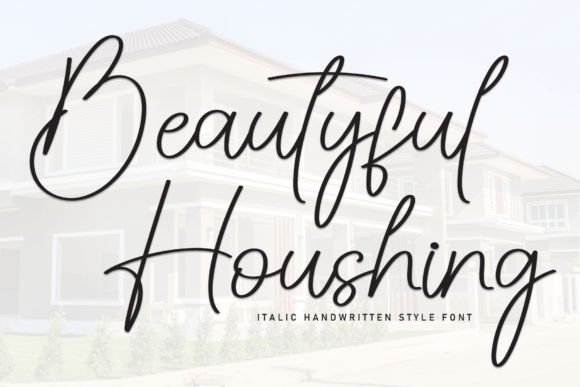
Beautyful Houshing Font: A Sweet Handwritten Typeface for Creative Projects
There's something undeniably magnetic about a font that feels like it was written by a real person. You know the type—the kind of lettering that brings warmth, personality, and a sense of authenticity to whatever it touches. Beautyful Houshing Font is exactly that kind of typeface. It's a sweet, friendly handwritten font that manages to feel both approachable and polished, making it a surprisingly versatile tool in any designer's or creator's toolkit.
What sets this particular font apart from the hundreds of handwritten options available today? It comes down to balance. Beautyful Houshing strikes a careful line between casual and professional. The letterforms have a natural flow that mimics real handwriting, but they're clean enough to remain legible at smaller sizes and across different media. That's a harder needle to thread than most people realize. Plenty of script fonts look gorgeous at 72 points on a mood board but fall apart when you try to use them on a business card or a website header at actual reading size.
A Typeface That Adapts to Your Creative Vision
One of the most practical strengths of Beautyful Houshing Font is its adaptability. I've seen it used in wildly different contexts—from artisanal candle packaging to wedding invitation suites to Instagram story templates for lifestyle bloggers—and it holds up well in each scenario. The natural, slightly imperfect edges of the characters give designs a human touch that rigid, geometric typefaces simply can't replicate.
Think about the brands you gravitate toward. Many of the most memorable small businesses, especially in the food, beauty, wellness, and lifestyle spaces, rely on handwritten or script fonts to communicate their personality. A bakery that uses a stiff, corporate sans serif on its logo might technically be "professional," but it misses the emotional mark. Beautyful Houshing Font fills that gap beautifully. It whispers warmth and care without sacrificing clarity.
For logo design, this font offers a compelling starting point. Its unique style gives brands an immediate visual identity that stands apart from the sea of minimalist sans serifs dominating modern branding. That said, a good designer will always customize and refine a font for a logo rather than using it straight out of the box. Kerning adjustments, ligature tweaks, and thoughtful pairing with a complementary typeface can transform a nice font into a truly distinctive brand mark.
Where This Handwritten Font Truly Shines
Let's talk specifics. If you're wondering where Beautyful Houshing Font actually works best, here's a practical breakdown based on real-world application:
- Packaging design — Handwritten fonts excel on product labels, box designs, and sleeve wraps. They signal craftsmanship and care, which matters enormously for handmade goods, organic products, and boutique brands.
- Social media graphics — Platforms like Instagram, Pinterest, and TikTok reward visual personality. Using a creative font like Beautyful Houshing on quote graphics, promotional posts, or story templates helps content feel more personal and shareable.
- Wedding and event invitations — The sweet, friendly character of this typeface makes it a natural fit for stationery. Save-the-dates, RSVP cards, and event programs all benefit from that hand-lettered aesthetic.
- Website headers and hero sections — Pairing a handwritten display font with a clean sans serif body font is one of the most effective web design strategies for creating visual hierarchy and emotional impact. Beautyful Houshing works well for headlines, taglines, and call-to-action overlays.
- Blog graphics and editorial layouts — If you run a blog or publish digital content, having a go-to handwritten font for featured images, pull quotes, and section dividers can significantly improve the visual consistency of your brand.
- Merchandise and print-on-demand — Tote bags, mugs, greeting cards, and posters all benefit from typography that feels handcrafted. Just make sure you've reviewed the commercial licensing terms before selling products that include the font.
- Marketing assets — Email headers, PDF lead magnets, presentation slides, and promotional flyers can all use a touch of personality. A font like Beautyful Houshing breaks up the monotony of standard corporate templates without looking unprofessional.
Pairing Typography for Maximum Impact
No font exists in isolation. The real magic happens when you pair typefaces thoughtfully. Beautyful Houshing Font works best when it's contrasted with something structured and clean. Think of it as the "personality" font paired with a "workhorse" font.
For example, combining Beautyful Houshing with a geometric sans serif for body text creates a clear visual hierarchy. The handwritten font draws attention to key messages—headlines, product names, taglines—while the sans serif handles longer paragraphs where readability is paramount. This kind of font pairing strategy is something professional designers use constantly, and it's one of the simplest ways to make any layout look more polished.
A few pairing principles worth keeping in mind:
- Contrast is your friend. Pair a flowing script font with a structured sans serif or a clean serif. Avoid pairing two handwritten fonts together—it creates visual chaos rather than harmony.
- Test at actual sizes. Always preview your font combinations at the sizes they'll actually appear in your design. A pairing that looks stunning at 200 pixels might feel cluttered at 14 pixels.
- Consider your medium. A pairing that works beautifully on a printed poster might not translate well to a mobile screen. Digital projects demand more attention to on-screen legibility.
- Limit your typefaces. Two fonts are usually enough for most projects. Three is pushing it. More than three and your design starts to feel unfocused.
Readability and Practical Considerations
Let's address something important: not every beautiful font is right for every use case. Beautyful Houshing Font is a display and headline typeface at its core. That means it's designed for short bursts of text—titles, logos, captions, labels—rather than long-form paragraphs. Using a handwritten font for body copy is one of the most common typography mistakes I see, especially among newer designers and small business owners creating their own materials.
The general rule is straightforward. If someone needs to read more than a sentence or two, switch to a highly legible serif or sans serif font. Reserve Beautyful Houshing for the moments where you want to inject personality and draw the eye. This approach actually makes the handwritten font more effective, because it's used strategically rather than everywhere at once.
Also worth noting: always check what font styles and weights are included with your purchase. Some premium fonts come with alternates, ligatures, and stylistic sets that give you additional creative options. Understanding what's available ensures you're getting full value from your design assets and opens up possibilities you might not have initially considered.
Building a Brand Identity with Intentional Typography
Typography is one of the most underestimated elements of brand identity. People spend weeks perfecting their color palette and logo mark but choose fonts almost as an afterthought. That's a missed opportunity. The typefaces you use across your website, packaging, social media, and print materials communicate just as much about your brand as your logo does.
Beautyful Houshing Font can serve as a cornerstone of a brand's typographic system, particularly for businesses that want to project approachability, creativity, and warmth. A handmade soap company, a boutique coffee roaster, a personal coaching practice, a travel blogger—these are all brands where a handwritten typeface reinforces the core message rather than contradicting it.
The key is consistency. Once you've selected your fonts, use them the same way across every touchpoint. Headlines in Beautyful Houshing, body text in your chosen sans serif, accents in a complementary serif—whatever system you establish, stick to it. Visual consistency builds brand recognition over time. Your audience starts to associate those typographic choices with your business before they even read the words.
Before committing to any font for a brand project, test it across multiple applications. Mock up a business card, a social media post, a website header, and a printed flyer. Does the font maintain its character and legibility in each context? Does it complement your brand colors and imagery? Does it feel right for your target audience? These practical tests reveal more than any font specimen page ever will.
And one final note on licensing—always verify that your font license covers your intended use. Most premium fonts offer licenses for personal and commercial projects, but the specifics vary. If you're creating products for sale, using the font in client work, or embedding it in digital products, make sure your license permits those applications. It's a small administrative step that protects you legally and supports the designers who create these tools.