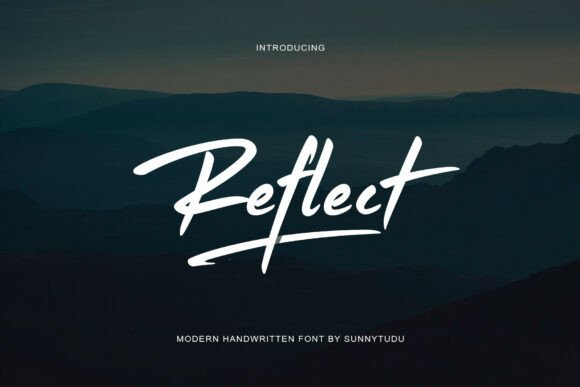
Reflect Handwritten Font: Capturing Raw Energy in Your Designs
There's a certain electricity in a hand-painted sign or a quickly scrawled signature. It feels immediate, authentic, and full of personality. Translating that raw, human energy into a digital project can be a challenge. Many script or handwritten fonts feel too perfect, too slow, or too delicate to convey true motion and edge. This is where a typeface like Reflect, a modern handwritten font by Sunnytudu, enters the conversation. It's designed not to mimic a quiet pen, but to capture the swift, confident sweep of a brush, making it a compelling tool for projects that demand attention and a sense of urban sophistication.
More Than Just a Pretty Script
At first glance, Reflect is a dynamic display font. Its character is defined by fast, sweeping strokes and sharp, tapering terminals that seem to slice through the air. The slightly slanted rhythm gives it an inherent sense of forward motion, as if the letters are rushing to get their message across. The "dry brush" aesthetic—where the texture of the brushstroke is visible—is key. It avoids looking digitally sterile, instead offering a tactile, human quality. This isn't a font for whispering; it's for making a statement. It communicates edge, confidence, and a personal touch that feels earned, not applied.
This visual personality makes it a powerful choice for specific applications. Think of the bold logo on a streetwear label, the dynamic title card for a sports documentary, or a watermark on a photographer's portfolio that needs to be seen but not distract. Its strength lies in its ability to inject energy and a modern sensibility into a design without sacrificing the human element that makes handwritten fonts so appealing in the first place.
Putting Reflect to Work: Practical Applications
The true test of any creative font is how it performs in the wild. Where does a typeface like Reflect genuinely shine? Its high-energy character makes it particularly effective in contexts where visual impact and brand personality are paramount.
- Branding & Logo Design: For brands in action sports, music, streetwear, or outdoor adventure, Reflect can form the core of a visual identity. It instantly signals dynamism and a hands-on approach. Paired with a clean, geometric sans-serif for body text, it creates a striking contrast that’s both professional and full of life.
- Packaging Design: On product packaging, especially for artisanal goods, craft beverages, or men's grooming products, the dry brush texture adds a layer of authenticity and craftsmanship. It suggests something made with care and energy.
- Social Media & Web Headers: In the fast-scrolling world of Instagram or TikTok, a bold header set in Reflect can stop a thumb. It’s perfect for promoting events, sales, or new content. As a web font for hero section callouts, it draws the eye and sets an energetic tone for the entire site.
- Editorial & Marketing Materials: Magazine feature titles, poster headlines for music festivals or athletic events, and cinematic title sequences all benefit from its motion-filled aesthetic. It can elevate a standard marketing email header or a digital ad banner from mundane to memorable.
- Merchandise & Invitations: For T-shirt graphics, sticker designs, or event invitations that aim for a cool, contemporary vibe, Reflect provides the perfect typographic voice. It feels personal and exclusive.
Building a Cohesive Visual Language
Using a distinctive font like Reflect is more than a stylistic choice; it's a strategic one for building brand recognition. When used consistently across touchpoints—from your website to your packaging to your social media graphics—it becomes a recognizable asset. Customers begin to associate that specific visual energy with your brand's values: confidence, authenticity, and motion.
However, its power requires thoughtful application. Because it's a display font, its primary role is for headlines, logos, and short bursts of text. Using it for long paragraphs would severely hinder readability. The key is to pair it wisely. Combine Reflect with a highly legible sans-serif font or even a classic serif font for body copy. This pairing creates a visual hierarchy that guides the reader's eye, making your design both impactful and easy to digest.
Smart Integration: Tips for Using Reflect Effectively
To get the most out of this typeface, consider these practical steps:
- Define Your Project's Goal First: Is your goal to convey raw energy, urban edge, or human craftsmanship? If your project calls for elegance, tradition, or minimalist calm, a different style of script font or a modern typography choice might be more appropriate. Match the font's personality to your message.
- Test Pairings Rigorously: Don't just assume a pairing works. Create mockups of your headline in Reflect next to paragraphs in your chosen body font (like Open Sans, Lora, or Roboto). Check for contrast in weight, style, and mood. The pairing should feel balanced, not conflicting.
- Explore the Included Styles: Many premium fonts come with stylistic alternates, swashes, or multiple weights. Check the font's specimen sheet. You might find a different 'R' or 'E' that works even better for your logo, or a slightly different weight that suits a sub-headline.
- Consider the Medium: While it works well digitally, test how the font renders at small sizes on screens. For print, ensure the texture and sharp terminals reproduce clearly in your final production method, whether it's screen printing, embroidery, or offset.
- Review the License: If you're using Reflect for a commercial project—a client's brand, merchandise for sale, or a professional service—ensure you have the correct commercial font license. This is a critical step in professional design assets management.
Ultimately, a font like Reflect is a tool for storytelling. It doesn't just present words; it imbues them with character and action. By understanding its strengths and applying it with intention, you can harness its raw energy to create designs that don't just look good, but feel alive and connected to an audience that values authenticity and bold expression. It’s about choosing typography that does more than occupy space—it makes a mark.