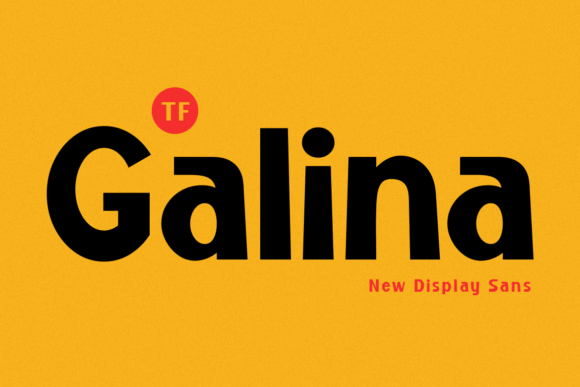
Galina Font: Modern Elegance with a Retro Soul
There's a particular quality in some typefaces that makes you do a double-take—something familiar yet fresh, contemporary yet comfortably nostalgic. Galina Font captures that exact balance. It's a display sans serif that walks the line between clean modernity and subtle vintage warmth, making it a surprisingly versatile tool for anyone building a visual identity or crafting standout designs.
What sets Galina apart isn't just its aesthetic appeal. It's the way its letterforms carry personality without sacrificing clarity. The curves are smooth, the proportions are balanced, and there's an understated confidence in each character. You won't find exaggerated serifs or overly ornamental details here. Instead, Galina relies on refined geometry and thoughtful spacing to create an impression that feels both polished and approachable.
Why This Typeface Feels So Adaptable
Fonts that lean too heavily into a single era or style often pigeonhole themselves. A purely futuristic sans serif might feel cold and corporate. A retro-inspired typeface can come across as kitschy or overly themed. Galina sidesteps both extremes. Its modern foundation gives it credibility in professional contexts—think tech startups, boutique agencies, or editorial publications—while its gentle vintage undertones inject just enough warmth to make it feel human and relatable.
This duality makes it a strong candidate for projects where you want to signal sophistication without feeling sterile. A coffee roaster's packaging, for instance, benefits from that subtle retro nod. So does a wellness brand's social media presence, a lifestyle blog's headers, or a wedding invitation suite that needs to feel elegant but not stuffy.
Practical Applications Across Creative Projects
Let's talk about where Galina actually works in real-world design scenarios, because a font's value ultimately comes down to how well it performs in context.
Branding and Logo Design: If you're developing a brand identity for a small business—say a skincare line, a boutique consultancy, or an artisan bakery—Galina gives you a strong visual anchor. Its display nature means it shines at larger sizes, making it ideal for wordmarks and logotypes. Pair it with a complementary serif or a simple sans serif for body copy, and you've got a typographic system that feels cohesive and intentional.
Packaging Design: On product labels and boxes, readability at a glance matters enormously. Galina's clean letterforms hold up well on physical materials, and its character adds shelf appeal without cluttering the design. Whether you're labeling handmade candles, gourmet snacks, or specialty beverages, this typeface helps your product look considered and trustworthy.
Social Media Graphics: Instagram posts, Pinterest pins, Facebook headers—these demand fonts that pop in small, fast-scrolling environments. Galina's distinctive shapes catch the eye quickly. Use it for headlines, quotes, or call-to-action text, and it will give your feed a consistent, professional look that builds recognition over time.
Web and Blog Design: For website headers, hero text, and section titles, Galina brings visual interest without sacrificing the clean aesthetic most modern sites require. It works particularly well for lifestyle blogs, portfolio sites, and e-commerce pages where you want typography to do some of the heavy lifting in establishing mood and tone.
Print Materials and Editorial Layouts: Think business cards, brochures, magazine spreads, and event programs. Galina's balanced proportions make it versatile enough for both large display text and smaller subheadings. In editorial design, it pairs beautifully with classic serif fonts for body text, creating a visual hierarchy that guides the reader naturally through the page.
Invitations and Event Stationery: Save-the-dates, menu cards, thank-you notes—these are contexts where personality matters. Galina's retro-modern blend gives formal materials a contemporary edge while still feeling celebratory and warm.
Merchandise and Digital Products: Tote bags, mugs, t-shirts, digital planners, e-book covers—Galina adapts to both physical and digital merchandise with ease. Its display qualities mean it stays impactful even when reproduced at various scales.
Building Visual Consistency and Brand Recognition
One of the most overlooked aspects of effective branding is typographic consistency. Using the same typeface across touchpoints—your website, your packaging, your social posts, your invoices—creates a thread that ties everything together. When someone encounters your brand on Instagram and then later sees your product on a shelf, that typographic familiarity triggers recognition.
Galina supports this kind of consistency because it's versatile enough to work across contexts without feeling repetitive. Its personality is distinctive enough to be memorable but restrained enough to adapt to different layouts and color palettes. That's a rare combination, and it's precisely what makes a premium font worth investing in for long-term brand building.
Pairing Galina with Other Typefaces
No font exists in isolation, and smart font pairing is where good design becomes great. Galina's display sans serif nature means it typically works best as your headline or accent typeface, paired with something more neutral for extended reading.
Try combining it with a classic serif like Garamond or Playfair Display for a sophisticated editorial feel. For a cleaner, more minimalist approach, pair it with a straightforward sans serif such as Open Sans or Lato for body text. If your project calls for a handwritten or script font for accents—think thank-you cards or boutique branding—Galina's structured letterforms provide a nice counterbalance to more organic, flowing scripts.
The key is contrast without conflict. You want your paired fonts to differ enough to create visual hierarchy but share enough underlying structure or mood to feel like they belong together. Always test your pairings in context—mock up a real layout rather than just looking at font specimens side by side.
Readability Considerations Worth Noting
As a display typeface, Galina is engineered for impact at larger sizes. That's where it truly excels. However, like most display fonts, it's not designed for long paragraphs of small body text. Using it at 12-point size for a full page of reading content would compromise legibility and tire the reader's eyes.
Instead, reserve Galina for headings, titles, pull quotes, logos, and short bursts of text where its personality can shine without becoming a hindrance. For body copy, choose a font specifically optimized for extended reading—something with comfortable letter spacing, consistent stroke widths, and well-defined character shapes at smaller sizes.
Also pay attention to the specific styles included with your purchase. Many premium fonts come with multiple weights—light, regular, medium, bold, perhaps even italic variants. Understanding what's available helps you create more nuanced designs and maintain visual variety within a single typeface family.
Licensing and Commercial Use
If you're planning to use Galina for client work, commercial products, or business branding, make sure you understand the licensing terms. Most premium fonts come with specific licenses that dictate how many users, devices, or projects can use the typeface. Some licenses cover desktop use only, while others include web fonts, app embedding, or server installation.
For small business owners and freelancers, this is especially important. Using a font without the proper license—even accidentally—can lead to legal complications down the road. Review the license agreement before purchasing, and if your needs change as your business grows, consider upgrading to ensure continued compliance.
Making the Most of Your Typography Choices
Choosing a typeface like Galina is ultimately about more than aesthetics. It's about communication. The fonts you select tell your audience something about who you are, what you value, and how seriously you take your work. A thoughtfully chosen display font signals attention to detail. It suggests that someone cared enough to make deliberate visual decisions rather than settling for whatever came pre-installed.
Take the time to experiment. Set your actual project text in Galina rather than relying on placeholder words. View it at the sizes you'll actually use. Print a test page if it's for physical materials. Check how it renders on different screens if it's for digital use. Typography rewards this kind of hands-on testing, and the difference between a good design and a great one often comes down to these small, intentional choices.